














Obesity Examination and Treatment
Content
Description
Obesity is not only unpleasant, it is a disease that reduces the quality of life and even shortens life expectation.
How to lose weight successfully? Find a doctor - specialist who will help you!
Weight loss under the supervision of specialists - doctors will guarantee the best patient care and safe weight loss without the yo-yo effect.

Facts
- Outpatient treatment
- Examination lasts 30 minutes
Obesity is a long-term disease, very difficult to treat, but also very widespread.
One in 5 women and one in 7 men suffer from obesity, which represents more than 1 billion people worldwide.
It is caused by a combination of several factors related to our busy time and lifestyle:
- Lack of exercise and a sedentary lifestyle
- Type of employment that prioritizes mental work in the office over manual work
- Fast food, convenience foods, soft-drinks, nighttime overeating
- Smoking and drinking alcohol (alcohol is very energetic)
- Lack of sleep and irregular schedule (working at night)
- Depression, negative body image
Obesity is associated with many complications such as:
- Type 2 diabetes (Diabetes Mellitus type 2)
- Cardiovascular risks - high blood pressure
- OSA - obstructive sleep apnea
- Significant limitation of mobility
Several measurements will help us assess nutrition:
- BMI - An index that compares a patient's height and weight
- Waist/height ratio (WHtR)
BMI values assess nutritional status in adults as follows:
| Below 18.5 | Underweight |
| 18.5 - 24.9 | Ideal (normal) weight |
| 25 - 29.9 | Overweight |
| 30 - 34.9 | Obesity I. degree |
| 35 - 39.9 | Obesity II. degree |
| 40 and above | Obesity III. degree |
Waist-to-height ratio (WHtR) assesses body fat distribution and risk of cardiovascular disease
| Waist circumference (cm) | Normal | Increased risk | High risk |
| Men | under 94 | 94 - 102 | over 102 |
| Women | under 80 | 80 - 88 | over 88 |
| Waist/height ratio | under 0.5 | 0.5 - 0.6 | over 0.6 |
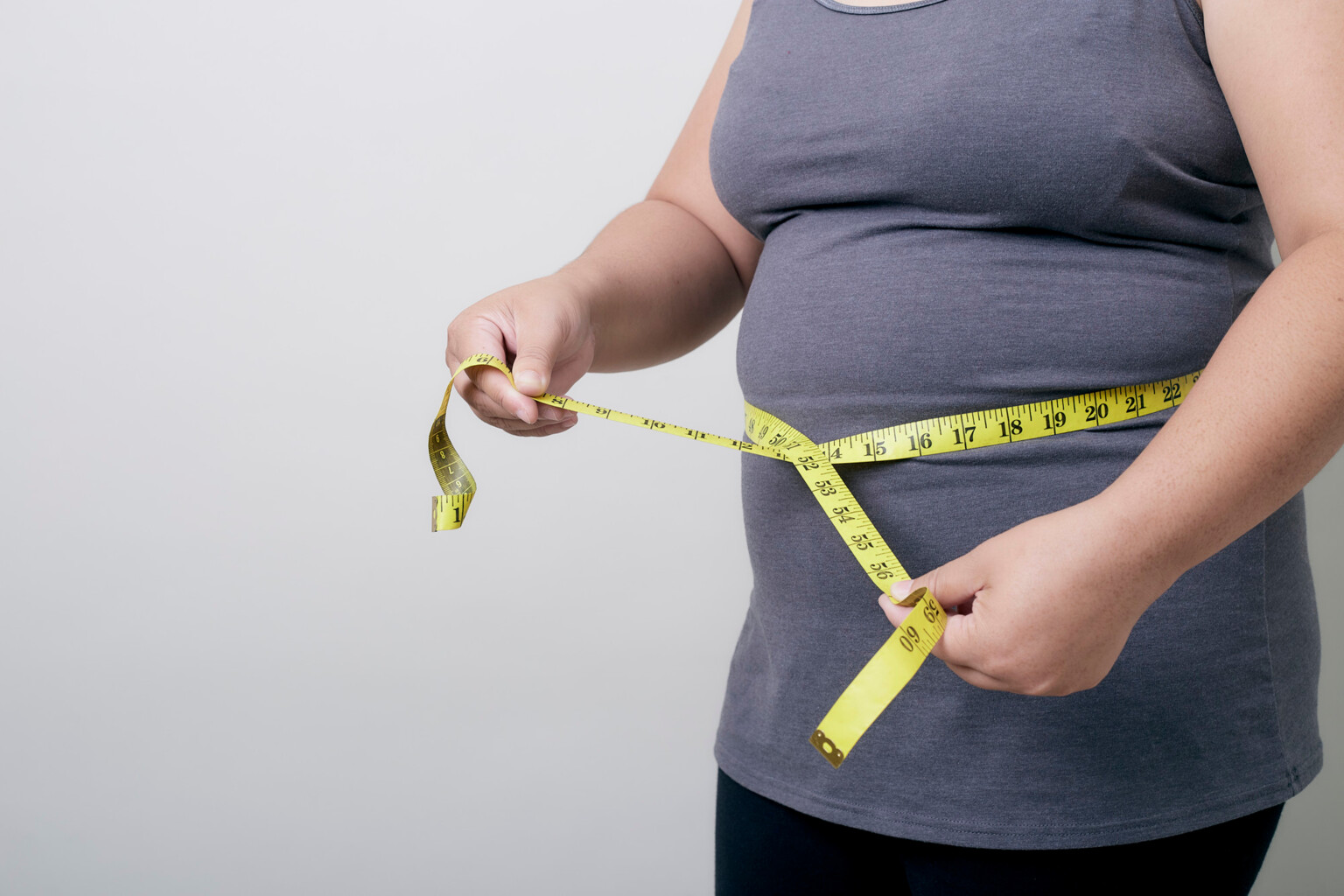
Recommendations for measuring waist circumference:
- Waist circumference is measured in the middle of the distance between the lower rib - the upper edge of the pelvic bone
- The patient is in underwear, the measurement is taken during a calm exhalation
- The measuring tape is applied in a horizontal plane - similar to a belt
How do you know that you are ready for change?
You need to change your behavior and habits - a simple questionnaire with 4 questions will tell you whether you are ready. You can find the GOODBYE OBESITY questionnaire on our website!
Have you taken the questionnaire? You are ready to fight obesity if you are in:
| Stage: Contemplation (so you are thinking about change) |
| Stage: Readiness stage for change |
| Stage: Maintenance |
If you are in the precontemplation stage, you are not ready yet - DO NOT DESPAIR!! - the fact that you are on our website means that obesity is bothering you and you would like to win the fight. Contact a specialist and get more information on how to prepare for change.
- Overweight and obese people are 3 times more likely to lose weight when working with a doctor
- You will achieve weight reduction under professional supervision and prevent the yo-yo effect (repeated weight fluctuations)
- You will reduce the risks that may occur with an unbalanced diet (so-called "crash diet")
Treatment of obesity is very demanding and long-term. It affects lifestyle and bad habits.
- Diet modification - correct setting of the diet - a nutritional therapist will help you
- Movement activity - focusing on a sedentary lifestyle and changing to an active regime
- Anti-obesity drugs - the first anti-obesity drugs became available in 1997, and development is constantly moving forward. Drugs approved for the treatment of obesity are:
| Name | Mechanism of action | Effect |
| Orlistat | Inhibits pancreatic lipase | Fat is not absorbed |
| Naltrexone + Bupropion | GABA antagonists | Reduces appetite in the brain |
| Liraglutide | GLP-1 analogue | Feeling of satiety |
| Semaglutide | GLP-1 analogue | Increases the feeling of satiety, reduces hunger |
| Tirzepatide | GLP-1 + GIP | Feeling of satiety, effect on insulin sensitivity |
- Bariatric surgery (the most famous are stomach reduction surgeries)